Why APIs Are the New Person Interfaces By Gustavo Woltmann
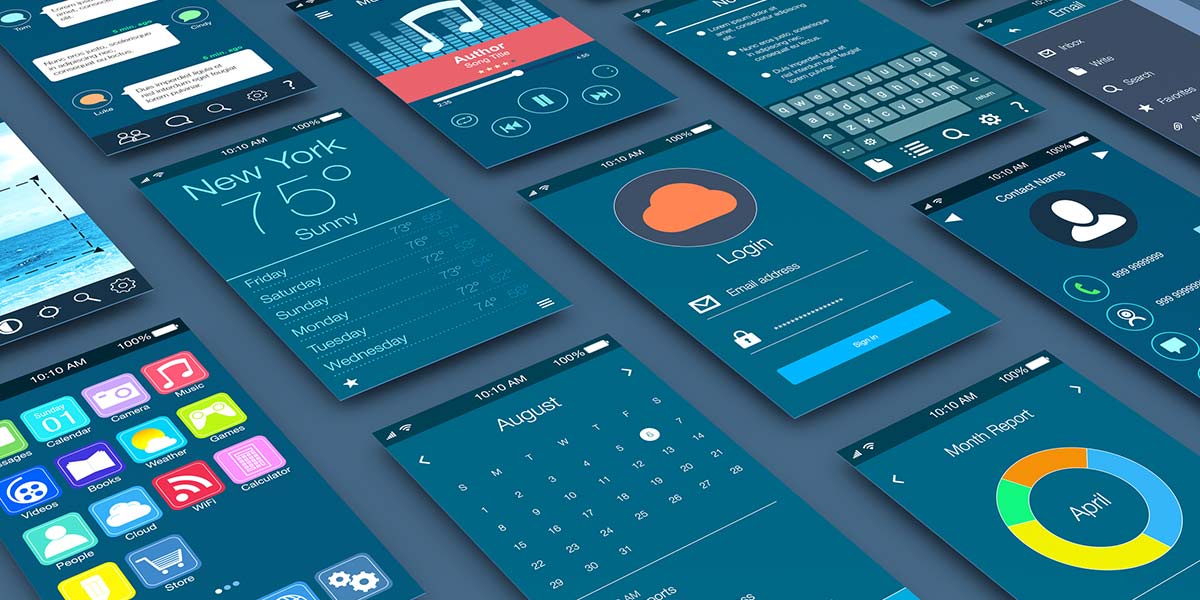
On earth of recent computer software, consumer practical experience now not life only on screens. Increasingly, it resides within the invisible connections involving devices—Those people streams of knowledge and instructions which make electronic ecosystems functionality. These connections are created achievable by APIs (Application Programming Interfaces), which have evolved from technical resources for developers in to the new frontiers of user interaction. Today, APIs would be the unseen interfaces shaping how customers encounter engineering, even after they in no way touch a button. I am Gustavo Woltmann, developer with twenty 12 months practical experience, let us Check out how meaninghul APIs are right now.
From Screens to Techniques
For decades, person interfaces were being outlined by what end users could see and touch—buttons, icons, menus, and screens. The art of person knowledge revolved all around producing these visual levels intuitive and exquisite. But as digital ecosystems expanded, a silent revolution commenced beneath the area. An important interactions have been no longer happening concerning human beings and screens, but amongst applications and systems.
Enter the API—Software Programming Interface—the invisible backbone of recent application. As opposed to guiding human clicks, APIs define how devices talk. They enable applications to share info, trigger steps, and coordinate sophisticated responsibilities mechanically. On this new reality, the boundaries amongst platforms blur: your trip-sharing application connects in your map service, your weather conditions widget pulls information from the meteorological server, as well as your Conditioning tracker syncs seamlessly using your phone.
This guiding-the-scenes connectivity has quietly redefined what “user practical experience” indicates. Though consumers interact via a graphical interface, the accurate working experience usually relies on how properly APIs Trade details during the track record. A flawless transaction, fast update, or genuine-time notification transpires because APIs are Functioning beautifully with each other.
Due to this fact, modern application enhancement is shifting its priorities. The visual layer—the display—remains to be vital, however it’s no more The complete Tale. The quality of the expertise now is dependent Similarly over the invisible architecture that powers it. Companies that after centered only on UI structure are now investing seriously in API layout, recognizing that dependability, velocity, and integration travel customer satisfaction around aesthetic charm.
From screens to programs, technological know-how is becoming much less about what we see and more about how every little thing connects. The way forward for person practical experience is not merely Visible—it’s structural, seamless, and run via the silent intelligence of APIs Doing the job at the rear of every tap, click, and swipe.
APIs as Invisible UX
In today’s connected electronic environment, probably the most seamless user encounters usually take place with no end users noticing it. Driving every single quick login, one particular-click on payment, or genuine-time update lies a network of APIs—the unseen interfaces that shape how technologies feels. While traditional design concentrates on what people can see, API style and design decides how smoothly everything will work.
APIs became the invisible layer of consumer encounter, orchestrating interactions across platforms and products. Whenever your social media app right away pulls your images from your cloud or your banking application syncs correctly with all your budgeting program, you’re benefiting from thoughtful API design. The responsiveness, trustworthiness, and consistency of Those people connections outline the overall knowledge around Visible design and style or navigation at any time could.
Inadequately designed APIs, On the flip side, can break that illusion of effortlessness. A gradual integration, mismatched information, or procedure failure generates friction just like a buggy interface would. That’s why a lot of leading corporations now deal with APIs as Main UX components, not only backend applications. Their design and style must prioritize clarity, predictability, and balance—features that make certain builders can Develop reputable features, and end users can love flawless efficiency.
For contemporary developers, crafting a fantastic API is really an act of consumer-centered style and design—just the “customers” in many cases are other builders. Complete documentation, regular endpoints, and intuitive logic make APIs much easier to undertake and integrate, fostering far better conclusion-person experiences.
In this way, APIs have redefined what it means to style and design for usability. They turn interactions into fluid, connected encounters that transcend screens. As programs go on to communicate much more right with one another, APIs are rising as The brand new frontier of UX—a person exactly where one of the most attractive interface often is the one customers in no way see.
The Rise in the API-1st Earth
Up to now, software was built Using the user interface initial—a display, a menu, a visual layout—while the underlying systems arrived afterwards. Now, that get has flipped. We now are in an API-initially earth, wherever purposes are intended from The within out, starting with the information and logic that generate each interaction.
An API-first approach usually means builders start off by defining how programs talk prior to they even build the person-experiencing levels. This attitude ensures that every company—irrespective of whether it’s authentication, payment processing, or analytics—is often reused, scaled, and integrated throughout many platforms. As an alternative to developing for a single interface, providers style and design for an ecosystem of connections.
The result is agility and interoperability. Modern corporations function across products, cloud providers, and 3rd-occasion integrations, and APIs make that complexity manageable. They permit startups to plug into worldwide infrastructures like Stripe, Google Maps, or OpenAI within several hours as opposed to months. This accelerates innovation and levels the actively playing area, enabling compact teams to make innovative products that rival company software program.
For businesses, the shift to API-initially style isn’t just technological—it’s strategic. It encourages modular architecture, steady shipping, and less difficult collaboration between teams. APIs come to be the contract of interaction between inside systems and external associates, supplying security within an ever-shifting electronic landscape.
Inside a earth pushed by automation and connectivity, APIs are not an afterthought—they’re the inspiration. They power every little thing from logistics networks to clever homes, transforming how software package is built, taken care of, and expert. The increase from the API-1st environment represents a fundamental adjust in how technological know-how evolves: much less about screens and clicks, and more about how every single procedure talks, shares, and grows together.
Collaboration, Automation, and the New UX
As APIs get Middle phase in modern-day program, they’re not just enabling technologies—they’re reshaping how folks and programs collaborate. Within an API-pushed ecosystem, collaboration extends outside of groups and instruments into the very architecture of digital products. APIs act as the bridges in between providers, automating workflows and making experiences that really feel effortlessly connected.
Consider how these days’s productiveness resources perform: your calendar syncs along with your video clip conferencing app, your messages trigger project updates, and your data files are quickly backed up throughout platforms. None of this occurs manually—it’s powered by APIs working quietly during the history. This invisible collaboration offers rise to a brand new kind of person practical experience, one that values automation and integration more than traditional interface structure.
For builders and merchandise teams, APIs also redefine collaboration internally. Instead of siloed devices, teams function from the shared Basis of reusable components. Designers, engineers, and analysts can Establish and refine solutions concurrently, utilizing APIs given that the connective tissue that keeps every thing aligned and dependable. This modular technique accelerates iteration, reduces redundancy, and would make items more adaptable to vary.
From your person’s viewpoint, the best electronic experiences are people who anticipate demands and remove friction. APIs make that doable by enabling genuine-time facts movement and automation—whether it’s sensible recommendations, quick payments, or contextual notifications.
In the era of collaborative automation, the Gustavo Woltmann code person expertise is now not confined to some display screen or a single software. It life within the seamless coordination involving methods. APIs tend to be the unseen collaborators, empowering humans and devices to operate in sync. The new UX just isn't pretty much creating interfaces—it’s about planning interactions between ecosystems, in which automation and collaboration determine what “person-friendly” actually usually means.
Creating the way forward for Invisible Interfaces
As APIs continue on to weave together the digital entire world, They are really paving the way for any long run where interfaces might disappear entirely. The subsequent technology of person experience won’t count on screens or buttons—it is going to count on seamless, context-knowledgeable interactions made feasible by smart, interconnected programs driven by APIs.
Invisible interfaces are by now below in refined sorts: a voice command that orders groceries, a smartwatch that adjusts your thermostat, or an application that implies the best route before you even ask. These experiences are constructed not on conventional design and style factors but on info circulation, automation, and integration—all orchestrated by means of APIs.
Planning for this foreseeable future needs a shift in considering. As opposed to focusing on what customers see, designers and developers will have to consider how units have an understanding of and answer. The emphasis moves from Visible format to behavioral logic—crafting interactions which are anticipatory, all-natural, and trustworthy. Thriving API structure will copyright on clarity, protection, and adaptability, making certain that invisible interactions stay dependable and respectful of person intent.
This change also redefines creativity in technology. The designers of tomorrow will condition ecosystems, not simply encounters. They’ll need to consider how diverse solutions, sensors, and data resources collaborate to type a unified, human-centered system.
During this entire world, APIs turn out to be the architects of invisibility. They enable frictionless, predictive ordeals in which the interface fades away plus the interaction alone turns into the item. As we shift toward ambient computing, good environments, and AI-driven personalization, the way forward for user working experience gained’t be what we contact—It's going to be what seamlessly happens for us, run from the silent structure of APIs.
Conclusion: The Tranquil Energy At the rear of the Display
APIs have redefined what this means to interact with know-how. They may not have buttons or shades, Nonetheless they form how electronic experiences come to feel—smooth, linked, and speedy. In an ever more interconnected world, the API is not simply a developer’s Instrument. It’s The brand new person interface, quietly transforming how we Dwell, do the job, and link from the electronic age.